


Responsible Gambling Tools for Canadian Online Casino Play
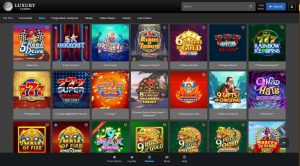
Responsible gambling is easier to practise when limits are chosen before play begins rather than during an exciting session. For readers assessing lussurio casino online, the most useful question is not how many games or promotions are available, but whether the account controls match personal boundaries. The available information describes tools for deposits, wagering, losses, session time, reality checks, cooling-off periods and self-exclusion. These features can support a safer routine, although they do not remove the risks of gambling or replace personal judgement.
Which controls can shape a safer gambling routine?

Deposit limits are usually the first practical control to consider. They define how much money can be added during a chosen period, helping separate gambling funds from ordinary household spending. A daily limit may suit someone who wants close oversight, while a weekly or monthly limit can provide a broader budget boundary. The important point is to select an amount that remains affordable even if it is completely lost.
Wagering and loss limits serve different purposes. A wagering limit may restrict the total amount staked, whereas a loss limit focuses on the net amount lost over a stated period. Neither should be treated as a target. Setting a maximum does not make a loss acceptable if it would affect rent, bills, debt payments or essential savings. Players should also check whether the control applies immediately, when it resets and whether pending bets or bonus play are treated differently.
Time limits and reality checks address a risk that money controls may miss: losing track of how long a session has lasted. A time limit can establish a stopping point, while a reality check interrupts play with a reminder of elapsed time or activity. These prompts work best when treated as decisions to pause, not as minor notifications to dismiss. Taking a real break away from the screen makes the control more meaningful.
How should limits be set before the first session?
Begin with a written entertainment budget. This should come from discretionary money after regular expenses, existing commitments and planned savings have been covered. Decide how often gambling is permitted and whether the budget is divided across sessions. Avoid using credit, borrowed money or funds intended for necessities. A written figure is easier to follow than an informal promise made after a win.
Next, choose controls that reflect personal behaviour rather than an idealised version of it. Someone who tends to chase losses may need a firm loss limit and a short session limit. Someone who checks an account repeatedly may benefit from a low deposit cap and cooling-off periods. If a limit can be increased easily but takes time to decrease, set it conservatively. Review the operator’s stated conditions to understand how each setting operates.
Finally, record the settings and the date they were introduced. This creates a simple reference point for assessing whether play remains recreational. If the budget is repeatedly exhausted early, or if the person feels pressure to raise a limit, that is useful evidence that the current arrangement is not working. The appropriate response is not to expand the budget, but to pause, lower access or seek independent support.
What do cooling-off periods and self-exclusion actually change?
A cooling-off period is designed for a temporary break. It may be suitable when gambling has become too frequent, distracting or emotionally charged, but the person is not yet seeking a permanent restriction. During the selected period, account access or gambling activity may be limited. Players should check whether the break affects promotional messages, deposits, withdrawals, bonus balances and any unresolved account matters.
Self-exclusion is a stronger boundary intended to prevent gambling for a defined period or, depending on the arrangement, indefinitely. It should be considered when repeated attempts to control play have failed, when gambling is causing financial or relationship harm, or when urges feel difficult to manage. Self-exclusion is not the same as logging out or deleting an app; users should read the operator’s process carefully and request the restriction through the stated account or support channel.
These tools have practical limitations. They cannot recover money already lost, guarantee that every gambling opportunity elsewhere will be blocked or solve underlying stress by themselves. A person using self-exclusion should also consider blocking gambling advertising, removing saved payment details, asking a trusted person for support and contacting a health or counselling service. For broader information about gambling-related harm, problem gambling information from CAMH explains warning signs and support considerations.
Why should bonus conditions be treated as a separate limit?
A promotion can alter the pace and cost of play, so it deserves its own review before acceptance. The published material describes a welcome package of up to 550% in matched bonuses and 400 free spins across qualifying deposits, but the headline does not establish what every Canadian account will receive. Amount caps, minimum deposits, currency, promotional routes and eligibility requirements may differ. Readers should rely on the specific offer displayed in their account.
The wagering requirement is especially important. Published descriptions state that wagering can apply to the deposit plus the bonus, rather than to the bonus alone, while different descriptions give different multipliers. That distinction can substantially change the amount of play required before a withdrawal request is considered. Bonus-funded play may also exclude or limit contribution from live dealer, instant-win, crash or other categories. A promotion should be declined if its conditions are unclear.
Bonus balances may be forfeited after a withdrawal, and some offers permit only one active bonus at a time. A no-deposit offer, where provided, may include a winnings cap, wagering conditions or a qualifying deposit before withdrawal; it should not be assumed to be a permanent entitlement. Before accepting any promotion, check the expiry period, eligible games, maximum bet, contribution rates, withdrawal restrictions and cancellation rules. Treat the bonus as optional entertainment, never as a reason to increase a planned budget.

When is it better to stop rather than adjust a limit?
Changing a limit upward after a loss is a warning sign, particularly when the purpose is to recover money. Other indicators include hiding gambling activity, borrowing to continue, feeling restless when unable to play, neglecting work or family responsibilities, and repeatedly breaking personal rules. A win can also create risk if it leads to longer sessions, larger stakes or the belief that future outcomes are predictable.
At the first sign of chasing, pause the session and avoid making financial decisions while upset or excited. Withdraw from the gambling environment, remove access to immediately available funds and write down what happened. Do not respond by switching games, accepting a reload offer or increasing a loss limit. A temporary break can create space to decide whether stronger controls are needed.
Support is appropriate before a crisis develops. A trusted friend, family member, counsellor or healthcare professional can help with practical safeguards and emotional pressure. Account support may explain how to apply limits, cooling-off periods or self-exclusion, but it cannot provide treatment or replace independent advice. If gambling is affecting safety, housing, essential bills or mental health, seek professional assistance promptly rather than trying to manage the problem through further play.
Questions Canadian players often ask
Are responsible gambling limits a guarantee against harm?
No. Limits reduce access or spending but cannot eliminate risk, and some controls may apply only after a setting takes effect. They work best alongside a fixed entertainment budget, regular breaks and honest monitoring. If limits are repeatedly changed or ignored, a cooling-off period, self-exclusion or outside support may be more appropriate.
Can a bonus make a session safer or more affordable?
No. A bonus may add conditions, wagering requirements and time pressure. It can encourage longer or larger play than originally planned, particularly when the deposit and bonus are both subject to wagering. Read the offer before accepting it, and decline it if the rules would make the planned budget or stopping point harder to maintain.
What should someone do after breaking their own gambling rule?
Stop rather than trying to recover the loss. Record the amount and circumstances, remove convenient payment access, and apply a stronger account restriction if available. Speaking with someone trusted can add accountability. If the pattern continues or causes distress, contact a qualified support or healthcare service for confidential guidance.

